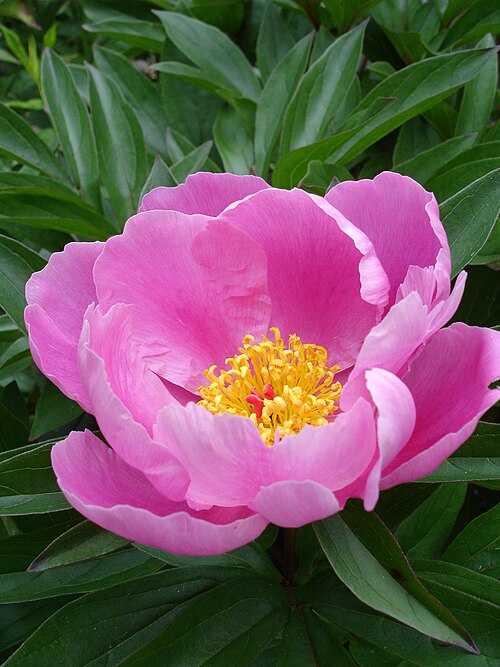
Image: Wikimedia Commons, CC BY-SA
White Peony Root
白芍 (Bái Sháo) · Paeonia lactiflora
A key blood-nourishing herb in TCM women's health formulas. Used for menstrual cramps, hormonal balance, and liver support. Often paired with Dong Quai.
Quick Summary
- Scientific Name
- Paeonia lactiflora
- Chinese Name
- 白芍 (Bái Sháo)
- Evidence Score
- 6/10
- Safety
- safe
Recommended dose: Follow product label directions. Typical range: 500-1500mg daily as standardized extract
Good For
Key Benefits
May support hormonal balance
Traditionally used for menstrual health and reproductive wellness
May help reduce inflammation and joint discomfort
Traditionally used to support mobility and ease pain
How to Take
Safety & Interactions
Possible Side Effects
- Generally well tolerated at recommended doses
- Mild digestive upset possible in sensitive individuals
Do Not Use If
- Known allergy to this plant or related species
- Consult healthcare provider if pregnant or nursing
Drug Interactions
- No major drug interactions documented at standard doses
- Inform your doctor of all supplements you take
Traditional Use
In Traditional Chinese Medicine, 白芍 (Bái Sháo) has been used for centuries. It nourishes blood and supports the liver's role in regulating menstruation according to TCM theory. TCM practitioners use it to expel wind-dampness and strengthen the sinews and bones.
Modern Research
Moderate research exists for this herb, including some clinical trials and substantial preclinical data. While not as extensively studied as top-tier herbs, the evidence supports several traditional uses. More human trials would strengthen the evidence base.
View all studies on PubMed for Paeonia lactiflora →Where to Buy
Affiliate links — purchases support this free resource.