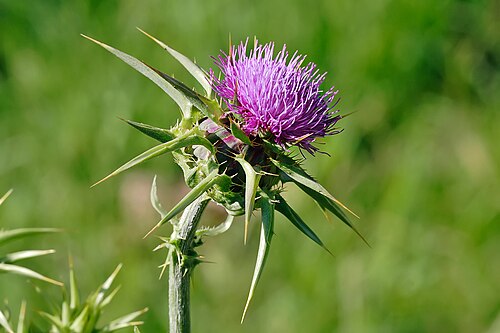
Image: Wikimedia Commons, CC BY-SA
Milk Thistle
水飞蓟 (Shuǐ Fēi Jì) · Silybum marianum
The gold standard for liver support supplements. Contains silymarin, a potent antioxidant compound that protects liver cells from damage and supports detoxification.
Quick Summary
- Scientific Name
- Silybum marianum
- Chinese Name
- 水飞蓟 (Shuǐ Fēi Jì)
- Evidence Score
- 7.5/10
- Safety
- safe
Recommended dose: 200-400mg silymarin (from 140-300mg milk thistle extract standardized to 70-80% silymarin) 2-3x daily
Good For
Key Benefits
Protects liver cells from damage
Clinical trials show benefit in alcoholic liver disease and hepatitis
Supports liver regeneration
Silymarin stimulates protein synthesis in liver cells, promoting regeneration
Antioxidant protection
Silymarin is 10x more potent than vitamin E as a liver antioxidant
May reduce insulin resistance
Trials in diabetic patients show improved fasting glucose and HbA1c
How to Take
Safety & Interactions
Possible Side Effects
- Very well tolerated — one of the safest herbs
- Mild laxative effect in some
- Rare: allergic reaction in people allergic to ragweed family
Do Not Use If
- Allergy to Asteraceae/Compositae family (ragweed, daisies)
- Hormone-sensitive conditions (weak estrogenic effect at very high doses)
Drug Interactions
- May affect CYP enzymes — theoretical concern with many drugs
- Diabetes medications — may potentiate blood sugar lowering
- Statins — may provide additive liver protection (beneficial interaction)
Traditional Use
Not a traditional TCM herb — Western origin. However, Shui Fei Ji (水飞蓟) is now included in Chinese pharmacopoeia. Used in European folk medicine since ancient Greece for liver and gallbladder complaints. The Roman historian Pliny the Elder recommended it for bile.
Modern Research
Over 1,400 studies. Silymarin complex (silybin, silychristin, silydianin) provides hepatoprotection through multiple mechanisms: antioxidant, anti-inflammatory, antifibrotic, and cell-regenerating. Used as emergency treatment for death cap mushroom (Amanita) poisoning in hospitals.
View all studies on PubMed for Silybum marianum →Where to Buy
Affiliate links — purchases support this free resource.