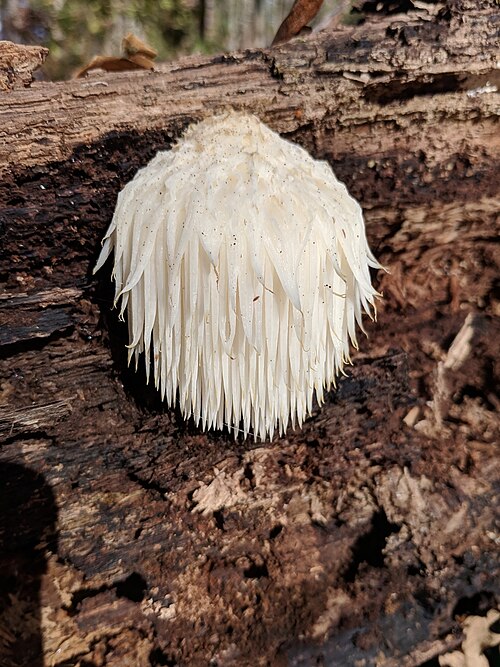
Image: Wikimedia Commons, CC BY-SA
Lion's Mane Mushroom
猴头菇 (Hóu Tóu Gū) · Hericium erinaceus
A culinary and medicinal mushroom gaining massive popularity for its unique ability to stimulate nerve growth factor (NGF) production, supporting brain health and cognitive function.
Quick Summary
- Scientific Name
- Hericium erinaceus
- Chinese Name
- 猴头菇 (Hóu Tóu Gū)
- Evidence Score
- 5.5/10
- Safety
- safe
Recommended dose: 500-3000mg daily (fruiting body extract or whole mushroom powder)
Good For
Key Benefits
Stimulates nerve growth factor (NGF)
In vitro and animal studies confirm hericenones and erinacines stimulate NGF synthesis
May improve cognitive function
Small clinical trial in elderly showed improved cognitive scores with 16 weeks supplementation
Supports gut health
Animal studies show protection against gastric ulcers and anti-inflammatory gut effects
May reduce anxiety and depression
Clinical trial showed reduced depression and anxiety scores in menopausal women
How to Take
Safety & Interactions
Possible Side Effects
- Generally very well tolerated
- Rare: itchy skin (possible allergy)
- Mild digestive changes initially
Do Not Use If
- Mushroom allergy
- Caution with blood clotting disorders (very limited data)
Drug Interactions
- No significant known drug interactions
- Theoretical concern with anticoagulants (insufficient evidence)
Traditional Use
Known as Hou Tou Gu (猴头菇) in TCM — used for digestive weakness, gastric ulcers, and to nourish the body. Traditionally prepared in soups. Also called yamabushitake in Japan where it has centuries of culinary and medicinal use.
Modern Research
563 studies on PubMed with growing rapidly. Unique among mushrooms for nerve-regenerating compounds. Two classes of active compounds: hericenones (from fruiting body) cross the blood-brain barrier; erinacines (from mycelium) stimulate NGF production directly.
View all studies on PubMed for Hericium erinaceus →Where to Buy
Affiliate links — purchases support this free resource.