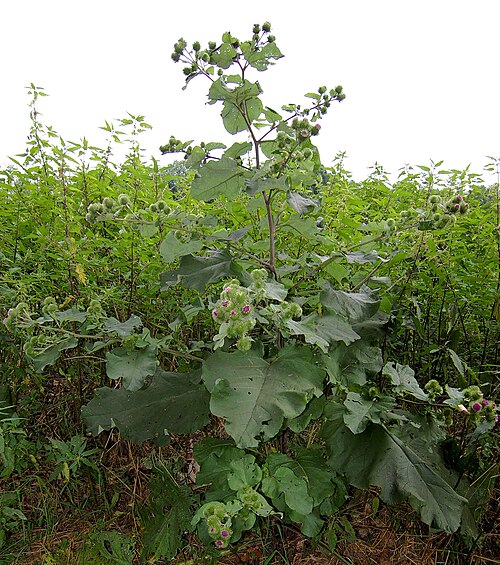
Image: Wikimedia Commons, CC BY-SA
Burdock Root
牛蒡 (Niú Bàng) · Arctium lappa
A prebiotic-rich root vegetable used in both Japanese cuisine (gobo) and TCM for skin conditions, detoxification, and blood purification. Contains inulin fiber.
Quick Summary
- Scientific Name
- Arctium lappa
- Chinese Name
- 牛蒡 (Niú Bàng)
- Evidence Score
- 5.5/10
- Safety
- safe
Recommended dose: Follow product label. Often taken as tea (3-5g dried herb steeped 10 min) or 500-1000mg extract with meals
Good For
Key Benefits
May support skin health and appearance
Traditionally used to nourish the complexion and promote radiance
May support healthy digestive function
Traditionally used to harmonize the stomach and intestines
How to Take
Safety & Interactions
Possible Side Effects
- Generally well tolerated at recommended doses
- Mild digestive upset possible in sensitive individuals
Do Not Use If
- Known allergy to this plant or related species
- Consult healthcare provider if pregnant or nursing
Drug Interactions
- No major drug interactions documented at standard doses
- Inform your doctor of all supplements you take
Traditional Use
In Traditional Chinese Medicine, 牛蒡 (Niú Bàng) has been used for centuries. It supports the spleen and stomach — the foundation of post-natal qi production in TCM theory. It nourishes yin and blood to promote a healthy, radiant complexion in TCM beauty formulations.
Modern Research
Research is still emerging for this herb. Most evidence comes from animal studies, in-vitro experiments, and traditional use records. Limited clinical trial data is available. The herb shows promise but requires more rigorous human studies to confirm efficacy.
View all studies on PubMed for Arctium lappa →Where to Buy
Affiliate links — purchases support this free resource.