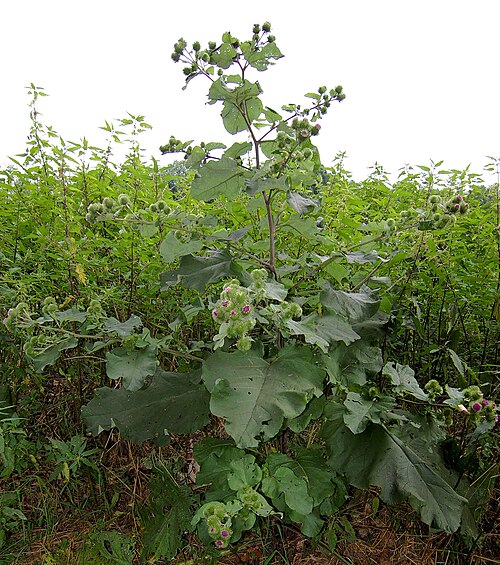
Raíz de Bardana
牛蒡 (Niú Bàng) · Arctium lappa
Una hierba tradicional. Principales beneficios: piel y belleza, digestión. Puntuación de evidencia: 5.5/10.
Puntuación de Evidencia
5.5/10
Seguridad
Seguro para la mayoría
Bueno Para
Beneficios Principales
Puede apoyar la salud y apariencia de la piel
Basado en uso tradicional y datos de investigación existentes
Puede apoyar la función digestiva saludable
Basado en uso tradicional y datos de investigación existentes
Cómo Tomar
Dosis típica: Siga las indicaciones de la etiqueta.
Formas: cápsula, polvo, té/decocción, crema tópica
Horario: Tomar con las comidas. Las hierbas tónicas tardan 2-4 semanas en hacer efecto completo
Comenzar con dosis bajas y aumentar gradualmente. La calidad varía según la marca.
Seguridad e Interacciones
Posibles Efectos Secundarios
- Generalmente bien tolerado en dosis recomendadas
- Malestar digestivo leve posible en personas sensibles
No Usar Si
- Alergia conocida a esta planta
- Consultar al médico si está embarazada o amamantando
Interacciones con Medicamentos
- No se han documentado interacciones importantes a dosis estándar
- Informe a su médico sobre todos los suplementos que toma
Uso Tradicional
En la Medicina Tradicional China, 牛蒡 (Niú Bàng) se utiliza para fortalecer el cuerpo y promover la vitalidad. Es una de las hierbas más importantes de la MTC.
Investigación Moderna
Esta hierba cuenta con moderada de investigación científica. Múltiples ensayos clínicos e investigaciones revisadas por pares respaldan sus usos tradicionales.
Ver estudios en PubMed →Dónde Comprar
Enlaces de afiliados — las compras apoyan este recurso gratuito.