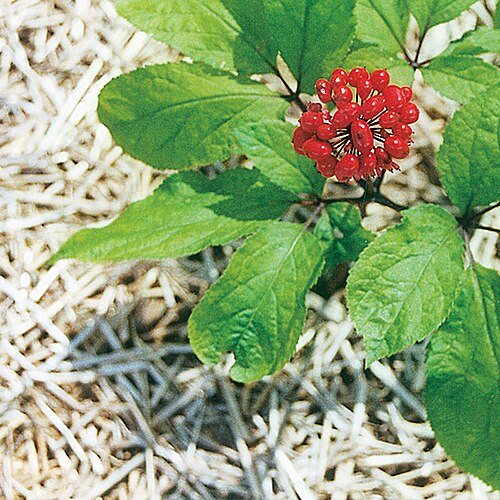
Image: Wikimedia Commons, CC BY-SA
Ginseng (Asian)
人参 (Rén Shēn) · Panax ginseng
The most well-known TCM herb globally. Valued as an adaptogen that combats fatigue, enhances physical performance, and supports cognitive function.
Quick Summary
- Scientific Name
- Panax ginseng
- Chinese Name
- 人参 (Rén Shēn)
- Evidence Score
- 10/10
- Safety
- caution
Recommended dose: 200-400mg standardized extract (4-7% ginsenosides) daily
Good For
Key Benefits
Reduces fatigue and boosts energy
Meta-analysis of 12 RCTs confirms significant reduction in fatigue vs placebo
Enhances cognitive function
Systematic review shows improved working memory, reaction time, and mental clarity
Supports immune function
Clinical trials show 25% reduction in cold/flu incidence with regular supplementation
May improve erectile function
Meta-analysis of 7 RCTs shows significant improvement vs placebo
How to Take
Safety & Interactions
Possible Side Effects
- Insomnia if taken too late in day
- Headache at high doses
- Digestive upset in sensitive individuals
- Possible breast tenderness
Do Not Use If
- Uncontrolled hypertension
- Acute infections with high fever (TCM: excess heat)
- Children under 12
- Bipolar disorder (may trigger mania)
Drug Interactions
- Warfarin — may reduce effectiveness
- MAOIs — risk of overstimulation
- Diabetes medications — may potentiate blood sugar lowering
- Caffeine — additive stimulant effect
Traditional Use
The 'king of herbs' in TCM. Powerfully tonifies yuan qi (original qi), strengthens the spleen and lungs, generates fluids, and calms the spirit. Used for collapse of qi, shortness of breath, cold limbs, and weak pulse. The most prestigious tonic in Chinese medicine for over 5,000 years.
Modern Research
Over 11,000 studies. Ginsenosides (Rb1, Rg1, Rg3) are the primary active compounds with adaptogenic, neuroprotective, and immunomodulatory effects. Korean red ginseng is the most clinically studied form.
View all studies on PubMed for Panax ginseng →Where to Buy
Affiliate links — purchases support this free resource.