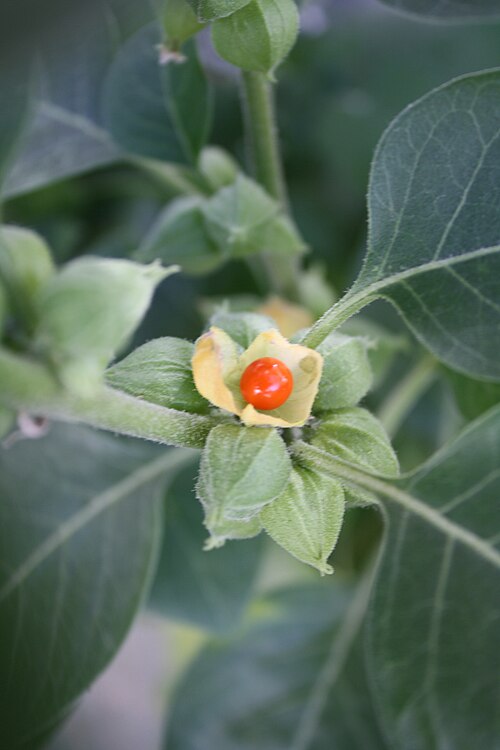
Image: Wikimedia Commons, CC BY-SA
Ashwagandha
南非醉茄 (Nán Fēi Zuì Qié) · Withania somnifera
An Ayurvedic adaptogen now widely used globally. Strong clinical evidence for reducing stress and anxiety, improving sleep quality, and boosting testosterone in men.
Quick Summary
- Scientific Name
- Withania somnifera
- Chinese Name
- 南非醉茄 (Nán Fēi Zuì Qié)
- Evidence Score
- 7.5/10
- Safety
- safe
Recommended dose: 300-600mg root extract daily (standardized to 5%+ withanolides)
Good For
Key Benefits
Significantly reduces stress and anxiety
Meta-analysis of 12 RCTs shows significant reduction in stress scores (Hamilton Anxiety Scale)
Improves sleep quality
Clinical trials show improved sleep onset, quality, and efficiency vs placebo
Increases testosterone in men
Multiple RCTs show 15-40% increase in testosterone with 8-12 weeks supplementation
Enhances athletic performance
Trials show improved VO2max, strength, and recovery in athletes
How to Take
Safety & Interactions
Possible Side Effects
- Mild drowsiness (can be beneficial for sleep)
- Digestive upset if taken on empty stomach
- Rare: thyroid stimulation
Do Not Use If
- Hyperthyroidism (may increase thyroid hormones)
- Autoimmune conditions (stimulates immune system)
- Pregnancy
- Scheduled surgery
Drug Interactions
- Thyroid medications — may potentiate
- Sedatives/benzodiazepines — additive drowsiness
- Immunosuppressants — may counteract
Traditional Use
In Ayurveda, ashwagandha is a rasayana (rejuvenative). Its name means 'smell of the horse' — referring to both its scent and the horse-like vitality it provides. Used for debility, stress, insomnia, and reproductive health for over 3,000 years.
Modern Research
One of the most clinically studied adaptogens. Withanolides modulate cortisol, GABA, and serotonin pathways. The root extract (not leaf) is preferred for most applications. Over 1,900 studies on PubMed.
View all studies on PubMed for Withania somnifera →Where to Buy
Affiliate links — purchases support this free resource.